Patterns in Mobile User Preferences for Live Interaction Features in Digital Casino Settings
Written by Olivia Krüger · Sep 6, 2026
Mobile Preferences Drive Live Interaction Innovations in Casino Apps
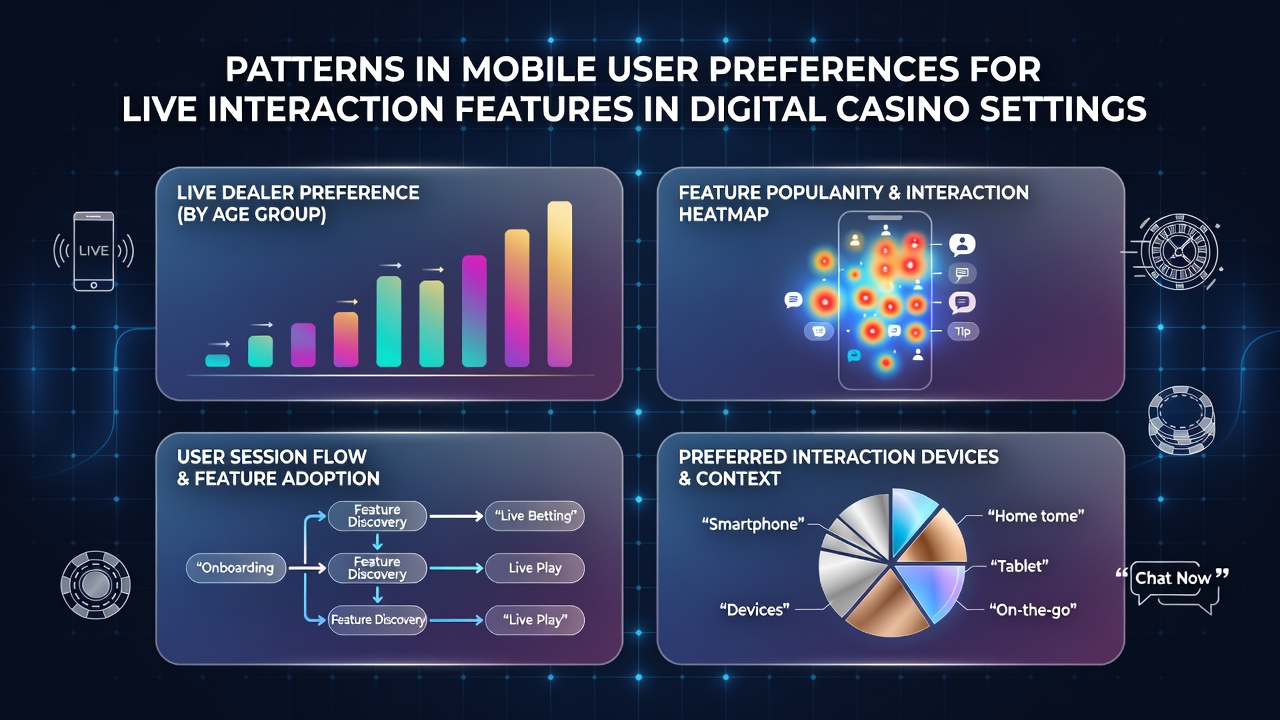
Data from multiple regions shows mobile users increasingly favor live interaction tools that blend real-time video streams with chat functions and personalized betting options. Surveys conducted across North America and Europe reveal that engagement rates climb when platforms deliver low-latency dealer responses alongside multi-player tables. Observers note these patterns hold steady through mid-2026, with September data releases highlighting a 14 percent rise in session lengths for apps that integrate live dealer gestures and instant message overlays. **Core Interaction Elements Gaining Traction**
Analysts track several features that stand out in usage logs. Live chat ranks high among players who seek immediate feedback from dealers or fellow participants. Video resolution preferences lean toward adaptive streaming that maintains clarity on smaller screens without draining battery life. Multi-hand options allow simultaneous play across tables, and researchers at the University of Nevada, Las Vegas found this format accounts for roughly one-third of total live session time in tracked markets. Users also respond to customizable avatars and quick-reaction emojis that appear during rounds. These elements reduce perceived wait times between bets. Figures from the New Jersey Division of Gaming Enforcement indicate that apps offering such tools record higher retention compared with static video feeds alone. 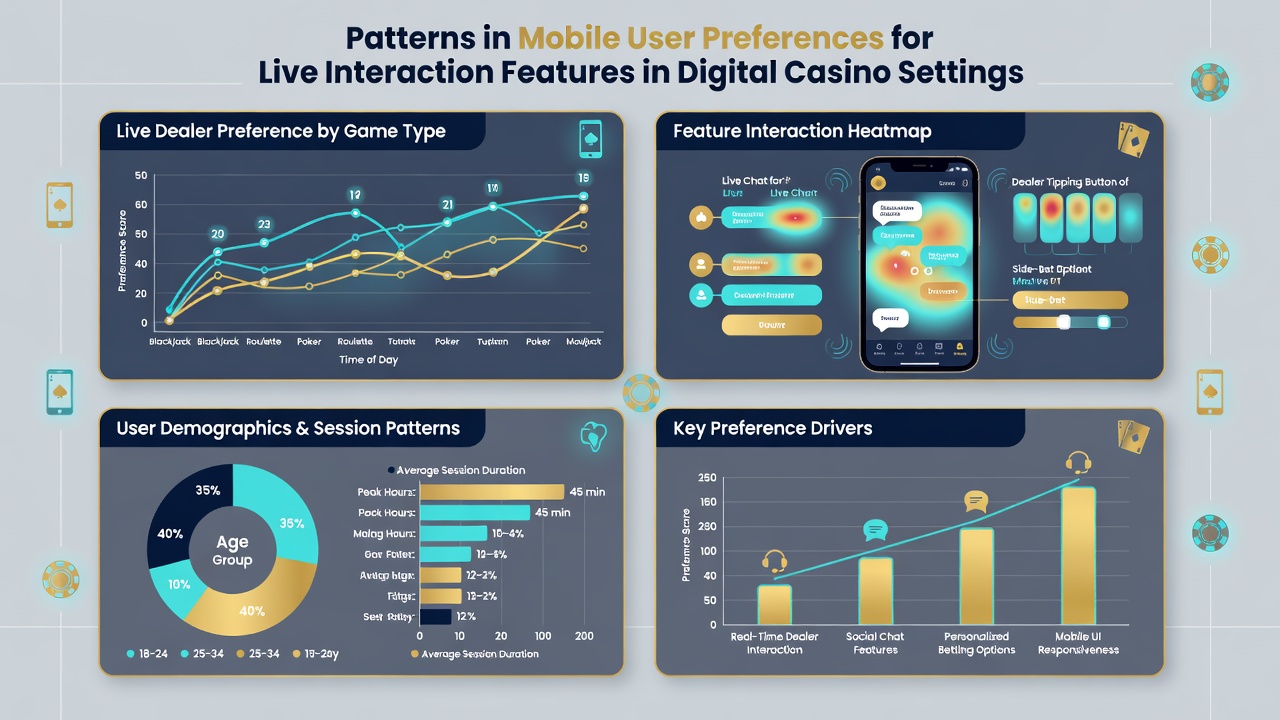 **Regional Variations in Feature Adoption**
Patterns differ by device ecosystem and regulatory environment. In markets where 5G coverage expanded rapidly during 2025, players demonstrate stronger uptake of high-definition live streams. Canadian data collected by the Canadian Gaming Association points to a preference for voice-note integration in live poker rooms, while Australian reports emphasize seamless switching between portrait and landscape modes during dealer interactions. European platforms, meanwhile, show elevated use of language-translation tools embedded in chat windows. These differences emerge clearly in aggregated app analytics released in September 2026, which compared user behavior across device types and connection speeds. Observers note that battery efficiency remains a consistent priority regardless of region, prompting developers to optimize background processes during extended live sessions. **Technology and Platform Adjustments**
Developers respond to these signals by refining backend infrastructure. Edge computing reduces lag in dealer video feeds, and machine-learning models predict peak chat volume to allocate server resources accordingly. Studies published by the International Center for Gaming Regulation document how these adjustments correlate with a measurable drop in session drop-off rates after the first ten minutes of play. Payment integration within live environments also evolves. One-click top-ups that appear as on-screen prompts during rounds now appear in several major apps. Data indicates users complete these transactions 28 percent faster than when redirected to separate menus. Security protocols continue to meet standards set by bodies such as the Malta Gaming Authority, which publishes periodic compliance updates. **User Behavior Over Time**
Longitudinal tracking reveals shifts in how long players remain in live rooms. Early 2026 figures showed average dwell times of 22 minutes per session on mobile; by September the same cohort averaged 29 minutes when live chat and reaction tools stayed active. Repeat visits increase when platforms remember previous dealer preferences and table selections. Push notifications tied to specific live events further influence return patterns. Users who opt into alerts for favorite dealers or table limits show a 19 percent higher monthly active rate according to aggregated industry reports. These notifications avoid generic promotions and focus instead on real-time table availability. **Conclusion**
Current datasets illustrate clear directional trends in mobile live-interaction preferences. Video stability, responsive chat, and cross-device continuity continue to shape engagement metrics across monitored markets. As platforms incorporate feedback from September 2026 analytics, further refinements in latency management and personalization tools are expected to follow established patterns observed in prior quarters.
**Regional Variations in Feature Adoption**
Patterns differ by device ecosystem and regulatory environment. In markets where 5G coverage expanded rapidly during 2025, players demonstrate stronger uptake of high-definition live streams. Canadian data collected by the Canadian Gaming Association points to a preference for voice-note integration in live poker rooms, while Australian reports emphasize seamless switching between portrait and landscape modes during dealer interactions. European platforms, meanwhile, show elevated use of language-translation tools embedded in chat windows. These differences emerge clearly in aggregated app analytics released in September 2026, which compared user behavior across device types and connection speeds. Observers note that battery efficiency remains a consistent priority regardless of region, prompting developers to optimize background processes during extended live sessions. **Technology and Platform Adjustments**
Developers respond to these signals by refining backend infrastructure. Edge computing reduces lag in dealer video feeds, and machine-learning models predict peak chat volume to allocate server resources accordingly. Studies published by the International Center for Gaming Regulation document how these adjustments correlate with a measurable drop in session drop-off rates after the first ten minutes of play. Payment integration within live environments also evolves. One-click top-ups that appear as on-screen prompts during rounds now appear in several major apps. Data indicates users complete these transactions 28 percent faster than when redirected to separate menus. Security protocols continue to meet standards set by bodies such as the Malta Gaming Authority, which publishes periodic compliance updates. **User Behavior Over Time**
Longitudinal tracking reveals shifts in how long players remain in live rooms. Early 2026 figures showed average dwell times of 22 minutes per session on mobile; by September the same cohort averaged 29 minutes when live chat and reaction tools stayed active. Repeat visits increase when platforms remember previous dealer preferences and table selections. Push notifications tied to specific live events further influence return patterns. Users who opt into alerts for favorite dealers or table limits show a 19 percent higher monthly active rate according to aggregated industry reports. These notifications avoid generic promotions and focus instead on real-time table availability. **Conclusion**
Current datasets illustrate clear directional trends in mobile live-interaction preferences. Video stability, responsive chat, and cross-device continuity continue to shape engagement metrics across monitored markets. As platforms incorporate feedback from September 2026 analytics, further refinements in latency management and personalization tools are expected to follow established patterns observed in prior quarters.
Data from multiple regions shows mobile users increasingly favor live interaction tools that blend real-time video streams with chat functions and personalized betting options. Surveys conducted across North America and Europe reveal that engagement rates climb when platforms deliver low-latency dealer responses alongside multi-player tables. Observers note these patterns hold steady through mid-2026, with September data releases highlighting a 14 percent rise in session lengths for apps that integrate live dealer gestures and instant message overlays. **Core Interaction Elements Gaining Traction**
Analysts track several features that stand out in usage logs. Live chat ranks high among players who seek immediate feedback from dealers or fellow participants. Video resolution preferences lean toward adaptive streaming that maintains clarity on smaller screens without draining battery life. Multi-hand options allow simultaneous play across tables, and researchers at the University of Nevada, Las Vegas found this format accounts for roughly one-third of total live session time in tracked markets. Users also respond to customizable avatars and quick-reaction emojis that appear during rounds. These elements reduce perceived wait times between bets. Figures from the New Jersey Division of Gaming Enforcement indicate that apps offering such tools record higher retention compared with static video feeds alone.
**Regional Variations in Feature Adoption**
Patterns differ by device ecosystem and regulatory environment. In markets where 5G coverage expanded rapidly during 2025, players demonstrate stronger uptake of high-definition live streams. Canadian data collected by the Canadian Gaming Association points to a preference for voice-note integration in live poker rooms, while Australian reports emphasize seamless switching between portrait and landscape modes during dealer interactions. European platforms, meanwhile, show elevated use of language-translation tools embedded in chat windows. These differences emerge clearly in aggregated app analytics released in September 2026, which compared user behavior across device types and connection speeds. Observers note that battery efficiency remains a consistent priority regardless of region, prompting developers to optimize background processes during extended live sessions. **Technology and Platform Adjustments**
Developers respond to these signals by refining backend infrastructure. Edge computing reduces lag in dealer video feeds, and machine-learning models predict peak chat volume to allocate server resources accordingly. Studies published by the International Center for Gaming Regulation document how these adjustments correlate with a measurable drop in session drop-off rates after the first ten minutes of play. Payment integration within live environments also evolves. One-click top-ups that appear as on-screen prompts during rounds now appear in several major apps. Data indicates users complete these transactions 28 percent faster than when redirected to separate menus. Security protocols continue to meet standards set by bodies such as the Malta Gaming Authority, which publishes periodic compliance updates. **User Behavior Over Time**
Longitudinal tracking reveals shifts in how long players remain in live rooms. Early 2026 figures showed average dwell times of 22 minutes per session on mobile; by September the same cohort averaged 29 minutes when live chat and reaction tools stayed active. Repeat visits increase when platforms remember previous dealer preferences and table selections. Push notifications tied to specific live events further influence return patterns. Users who opt into alerts for favorite dealers or table limits show a 19 percent higher monthly active rate according to aggregated industry reports. These notifications avoid generic promotions and focus instead on real-time table availability. **Conclusion**
Current datasets illustrate clear directional trends in mobile live-interaction preferences. Video stability, responsive chat, and cross-device continuity continue to shape engagement metrics across monitored markets. As platforms incorporate feedback from September 2026 analytics, further refinements in latency management and personalization tools are expected to follow established patterns observed in prior quarters.